Hallo Mandala Font Review for Web Designers
I was deep into a redesign for a boutique coaching client last Tuesday, staring at a hero section that felt technically perfect but emotionally flat. The layout had plenty of whitespace, the color palette was soothing, and the call-to-action button was positioned exactly where eye-tracking studies suggest it should be. Yet, something was missing. The brand needed warmth; it needed a human touch that standard system fonts just couldn't deliver. That's when I decided to test Hallo Mandala. As a web designer, I am often cautious with script typefaces because they can easily break responsiveness or hurt accessibility if not handled correctly. However, after integrating this lovely script font into the live prototype, the entire mood of the landing page shifted instantly.
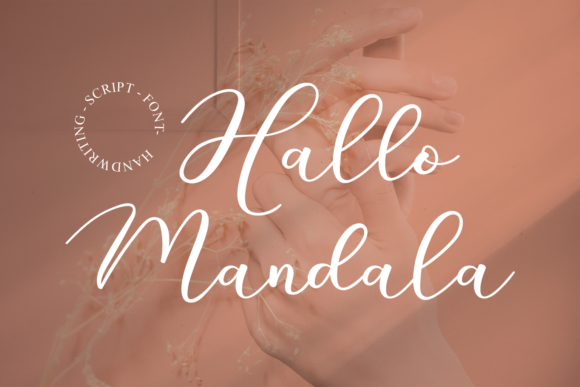
Hallo Mandala is not just another decorative display font; it has a distinct personality that feels both charming and playful. The characters seem to dance along the baseline, creating a rhythm that draws the eye naturally across the screen. In a digital environment where users scan content in seconds, this movement is crucial. It stops the scroll. When I placed the headline "Find Your Balance" in Hallo Mandala over a soft, textured background image, the text didn't just sit there; it felt alive. For web designers and UI creators looking to inject character into a brand identity without sacrificing modern aesthetics, this typeface offers a compelling solution.
Bringing Personality to Digital Hero Sections
The primary strength of Hallo Mandala lies in its ability to serve as a powerful focal point in web design. During my testing phase, I used it specifically for hero titles and section headers on a creative portfolio site. The font's thick and thin contrasts are well-defined, which helps it stand out even against complex imagery, provided you use a subtle text shadow or an overlay to ensure contrast ratios meet WCAG standards. Unlike some overly swirly scripts that become illegible on mobile devices, Hallo Mandala maintains a surprising level of clarity. The open counters and distinct letterforms prevent the text from blurring into a single shape when viewed on smaller smartphone screens.
For online store owners and course creators, the emotional appeal of this font cannot be overstated. A product landing page for handmade goods or a wellness course benefits immensely from typography that feels handwritten and personal. When potential customers land on a page, the typography sets the tone before they read a single word. Hallo Mandala signals creativity, approachability, and care. It tells the user that the brand behind the screen is human, not a faceless corporation. This psychological cue is vital for building trust in the early stages of the user journey.
Strategic Font Pairing for Modern Layouts
One of the most common mistakes I see in editorial design and web layouts is pairing a decorative script with another busy font. To let Hallo Mandala shine, it needs a partner that grounds it. In my recent project, I paired it with a clean, geometric sans serif font for the body copy and navigation elements. This combination created a beautiful visual hierarchy: the script demanded attention for the headlines, while the sans serif ensured that long paragraphs remained easy to read and scan.
You could also experiment with a modern serif font if you are aiming for a more sophisticated, editorial look. Imagine a blog header in Hallo Mandala followed by article text in a crisp serif; the result feels like a high-end digital magazine. The key is balance. Because Hallo Mandala has such a strong presence, keep the supporting typography simple. Avoid using it for subheaders that are too close in size to the main title, as this can create visual competition. Instead, use it sparingly for impact—think logo design elements, pull quotes, or specific call-out sections within a sales page.
Readability and Responsive Considerations
While Hallo Mandala is stunning for display purposes, it is essential to recognize its limitations in a responsive environment. As a rule of thumb, I never recommend using highly decorative script fonts for body copy, form labels, or dense dashboard layouts. The intricate details that make the font charming can become muddy at small sizes, leading to frustration for users trying to fill out a contact form or read terms and conditions. In my testing, I restricted Hallo Mandala to headings larger than 24px on mobile and 32px on desktop. Anything smaller risked losing the legibility of individual characters.
Furthermore, when designing for social media graphics or banner ads that will be embedded in a website, ensure that the text remains large enough to be read quickly. Users do not slow down to decipher difficult handwriting styles. If you are using this font for a button label, keep the text short—two or three words maximum. "Shop Now" or "Join Us" works perfectly; "Click Here to Learn More About Our Services" does not. By respecting these boundaries, you maintain a professional standard while still leveraging the creative flair of the typeface.
Technical Implementation and Licensing
From a technical standpoint, implementing Hallo Mandala requires attention to file formats and loading strategies. For optimal performance, ensure you are using the correct webfont formats (WOFF2) to minimize load times. A slow-loading font can cause a "flash of invisible text" (FOIT), which disrupts the user experience. Most premium font packages include the necessary files for web embedding, but always double-check the documentation. If you are a developer handing off designs to a client, provide clear instructions on how to implement the font via CSS to ensure the creative font renders consistently across different browsers.
Before launching any commercial project, it is critical to review the licensing agreement. Whether you are building a site for a client, creating a digital template for sale, or designing assets for your own online shop, you must verify that your license covers commercial web use. Some licenses distinguish between desktop use (for creating images) and webfont use (for live text). Ensure you have the right permissions to avoid legal headaches down the road. Additionally, check for multilingual support if your project targets a global audience; knowing which character sets are included will save you time during the localization process.
Ultimately, Hallo Mandala is a versatile tool in a web designer's arsenal. It bridges the gap between rigid digital structures and organic human expression. Whether you are refreshing a coaching website, designing a landing page for a new product launch, or crafting a unique digital brand kit, this font adds a layer of polish and personality that standard libraries often lack. By using it strategically in hero sections, pairing it with clean sans serifs, and respecting its readability limits, you can create online experiences that are not only functional but truly memorable.